
Quinoline typical Properties
Item
Index
Results
Appearance
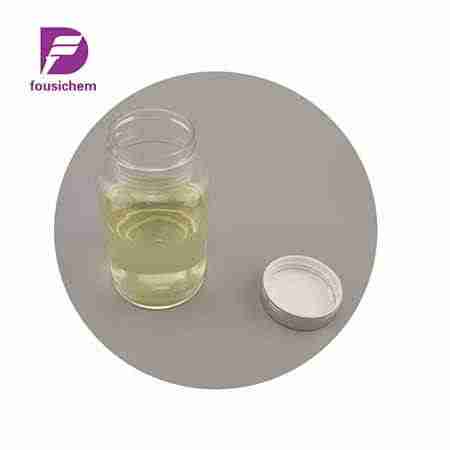
Light brown liquid
Light brown liquid
Assay
≥96.0 %
97.56%
Iso Quinoline
2%max
1.73%
Quianldine
2%max
1.80%
Xylidines
0.2%max
0.12%
Moisture
1%max
0.11%
BP
234-239℃
237℃
Density at 20℃
1.090-1.096g/ml
1.094g/ml
What is quinoline?
Quinoline is also called benzopyridine and azanaphthalene. It is a compound of pyridine and benzene in parallel and is a heterocyclic aromatic organic compound. At room temperature, it is a colorless hygroscopic liquid with a strong odor. When exposed to light, it will slowly turn yellowish and further brown. The molecular formula is C9H7N, slightly soluble in water, and easily soluble in many organic solvents such as ethanol and ether. There are two ways of combining solvents, called quinoline and isoquinoline.
Quinoline Usage
Quinoline is used to prepare niacin and hydroxyquinoline drugs, cyanine blue pigment and photosensitive pigment, rubber promoter and pesticide 8-hydroxyquinoline. Oral LD50 was 460mg/kg in rats.
Used as organic synthesis reagent, alkaline shrinkage agent and solvent.
Used as analytical reagent and solvent, as well as for the separation of vanadate and arsenate.
the production of cardiac agents, can also be used in acid, solvents, preservatives; Pharmaceutical industry for the production of niacin and 8-hydroxyquinoline drugs; Used in the printing and dyeing industry to produce cyanine blue pigment and light-sensitive pigment; Rubber industry used for making promoters; Agricultural use in the production of 8- hydroxyquinoline copper pesticides.
Quinoline Packaging and Shipping
Packing: IBC
Delivery: by sea, air and courier
Quinoline Storage
Warehouse ventilation and low temperature drying; Store separately from oxidant, acid and food additive